
A Saudi food pack has two jobs and most packs only do one. It has to win the shopper in the aisle at Panda or in a quick-commerce grid, and it has to pass the label check that comes before any shelf. Brands that design the front first and add the Arabic label later end up paying twice: once for the design, and again when the printer or the retailer sends it back. This guide covers how we run a food packaging project for the Saudi market, what it costs in riyals, the labelling basics a designer has to plan for, and the bilingual layout rules that keep both languages working.
Who is this guide for?
Founders and marketing managers of snack, bakery, sweets, dates, sauces, frozen and ready-to-eat brands selling in Saudi Arabia, or entering it from the UAE, Egypt or further away. If you are on product one and testing an idea, some of this is more than you need. If your product is going in front of a category buyer, all of it applies.
How does a food packaging project run, step by step?
We run every project in three phases: Discover, Design, Deliver. For a Saudi food brand that looks like this.
- Brief and shelf audit (days 1 to 3). What the product is, where it sells (which chains, which apps), the price point, and five competitors photographed together. We look at the shelf before we look at a typeface.
- Label inventory (days 1 to 5, in parallel). You or your regulatory consultant supply the approved label text in Arabic and English: name, ingredients, allergens, net weight, storage, nutrition values. We map how much space it needs on each size before designing the front.
- Concepts (week 1 to 2). Two or three directions on the main pack, each shown in Arabic and English together, at shelf distance and at thumbnail size.
- System and range (week 2 to 3). The chosen direction rolled across flavours, sizes and the outer case, with the label panel set in place.
- Print-ready files (week 3). Artwork built on the converter's dieline, with bleed, colour specification, finishes and barcode zones marked. Source files hand over on final payment.
That is how a defined scope gets to print-ready in about 3 weeks. Two things stretch it: label text that is still changing, and dielines that arrive late from the printer. Ask your converter for the dieline in week one.
What does food packaging design cost in Saudi Arabia?
The riyal is pegged to the US dollar at 3.75, so our published ranges convert cleanly.
| Scope | Typical design fee | What it usually covers |
|---|---|---|
| One product, one or two sizes | SAR 11,000 to 26,000 | Front, back and sides, Arabic and English, label panel layout, print-ready files |
| Range of 3 to 8 SKUs | SAR 26,000 to 56,000 | A system across flavours and sizes, outer case, rules for the next SKU |
| Brand + packaging + launch | SAR 56,000+ | Identity, full range, CGI renders for e-commerce and launch content |
Printing, plates, sampling and photography are separate. Four things push a Saudi food project up the range: bilingual artwork designed in parallel rather than translated, the size of the label panel, the number of fronts (three flavours in four sizes is twelve), and retailer requirements such as shelf-ready outer cases. The full breakdown is in our packaging design cost guide for Saudi Arabia, and our quote checklist shows what to compare between studios.
What SFDA labelling basics does a designer need to plan for?
Labelling for prepackaged food in the Kingdom follows SFDA requirements and the Gulf standard GSO 9 for food labelling. Your regulatory consultant owns the wording. The designer owns the space, the legibility and the position. Plan room for:
- Arabic on the pack. All mandatory information must appear in Arabic. English alongside is normal; Arabic missing is not.
- Product name and net quantity on the principal display panel.
- Ingredients in descending order, with allergens clearly identified.
- Nutrition information for most packaged foods. Some single-ingredient products are exempt; confirm for your product.
- Production and expiry dates printed on the pack, not stickered, plus storage conditions.
- Manufacturer or importer name and address, and country of origin.
- Batch or lot number and a barcode where retail scanners and staff can find them.
Requirements change, so check the current SFDA rules for your category before artwork is final. Our SFDA food label checklist for designers turns these points into a layout checklist you can hand to any studio. This is design guidance, not regulatory advice.
How do you lay out a bilingual Arabic-English food pack?
Most failed bilingual packs fail in the same way: the English was designed and the Arabic was poured into whatever space was left. Five rules prevent it.
- Design both languages from day one. Choose an Arabic typeface and a Latin typeface that share weight and rhythm. Set both in the first concept, not the last round.
- Decide which language leads. For a brand built for Saudi shoppers, the Arabic name often leads. Equal weight is the minimum; Arabic as a small subtitle reads as imported.
- Use a grid that works in both directions. Arabic reads right to left, so build a central or mirrored axis for the front instead of a left-aligned layout. Our bilingual packaging grid guide shows how.
- Give Arabic more height. Arabic letterforms need more vertical space for ascenders, descenders and dots. Set it at the same optical size as the English, not the same point size.
- Have the Arabic set by someone who reads it. Broken letter joins and reversed text are the most common print errors on GCC packs, and they come from design software that does not handle right-to-left text.

What makes a food pack work on a Saudi shelf?
- One idea at two metres. The shopper should know the category and the brand before they can read a word.
- A flavour system, not flavour packs. Fix the architecture and change one element per variant, usually colour or an illustration, so the range reads as one block.
- It works at 150 pixels. Quick-commerce and supermarket apps show packs as small tiles. If the name is not legible at that size, the pack loses online.
- The outer case is part of the brief. Modern trade buyers often want shelf-ready cases. See our guide to getting listed at Panda, Danube and Tamimi.
- Seasonal layers are planned. Ramadan and Eid editions sell when the core system already has room for them. Our Ramadan packaging plan covers timing.
What should you send a studio to get an accurate quote?
Five things: the number of products and sizes, whether the name and positioning exist, where it will sell, the target print date, and a budget range. Add photos of your current pack and your label text if you have them. With that, a serious studio can give you a real number inside a day.
Why brands work with Lircle on food packaging
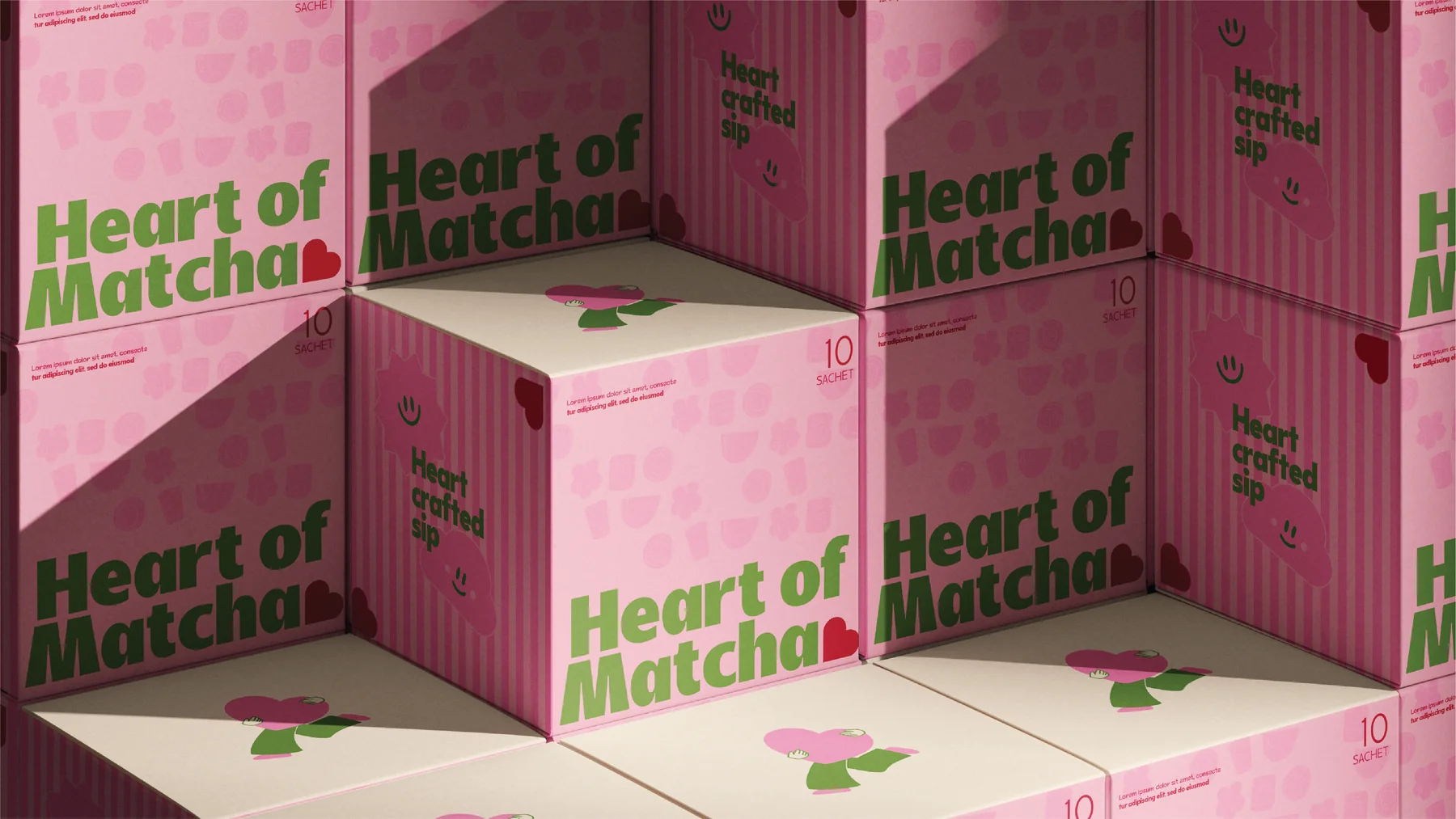
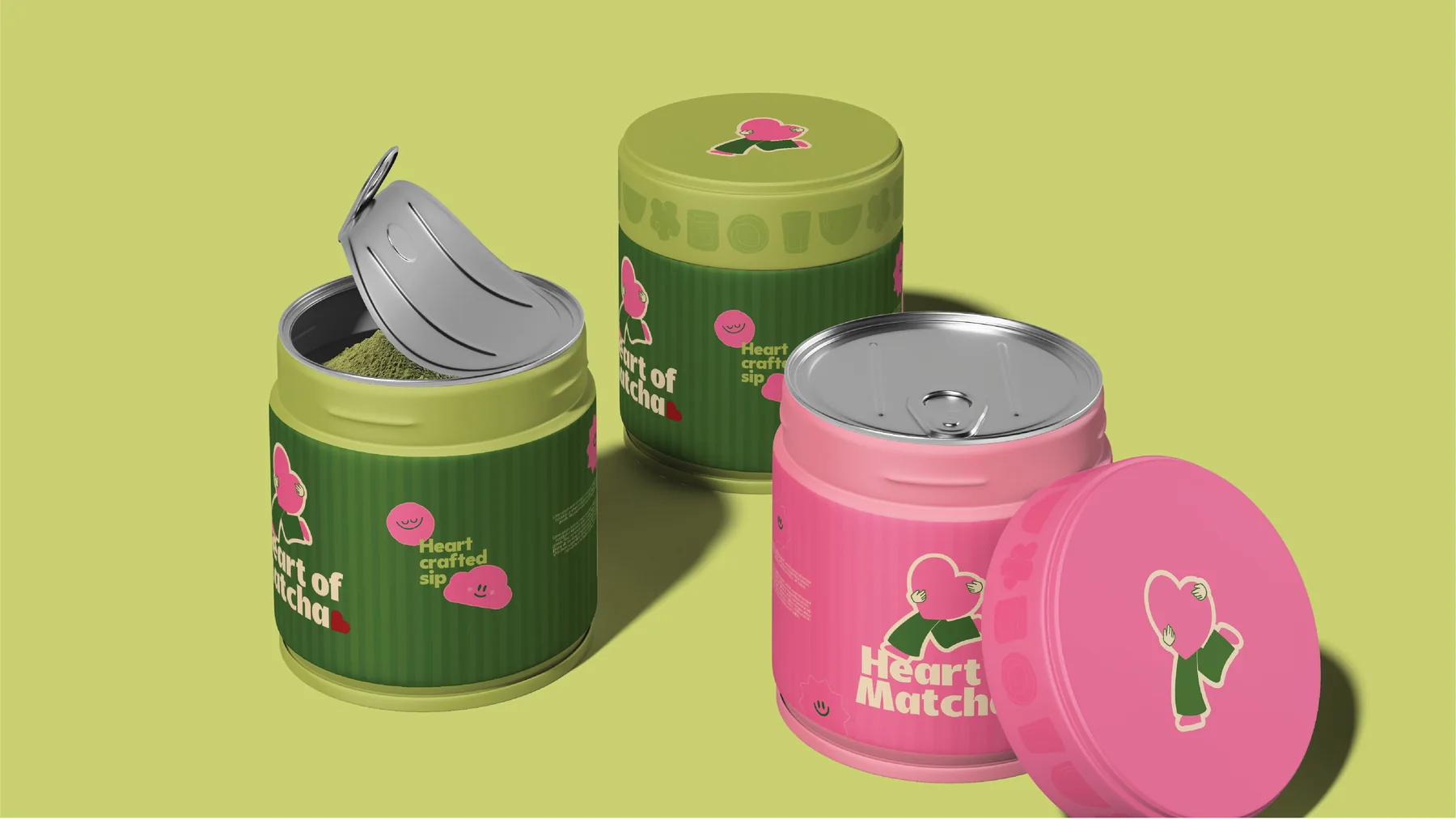
Lircle Creative Studio is an independent studio that has worked with 45+ client brands, most of them in the GCC. Our food and drink work includes Bunch of Munch, Heart of Matcha, Rover Coffee and Driplet. Every project is run personally by a Lircle director, with Arabic and English designed together and 3D renders at real scale before print. See how we work with Saudi brands on our packaging design page for Saudi Arabia, or our food packaging design page.
Frequently asked questions
How much does food packaging design cost in Saudi Arabia?
With an independent studio, about SAR 11,000 to 26,000 for one product and SAR 26,000 to 56,000 or more for a system across several SKUs. These are design fees only, before printing and any VAT.
How long does food packaging design take?
For a defined scope, such as one product family with its sizes and outer case, print-ready files can be delivered in about 3 weeks, provided the brief, label text and printer dielines are ready early. Printing and production time is separate.
Does food packaging in Saudi Arabia have to be in Arabic?
Yes. Mandatory label information on prepackaged food sold in the Kingdom must appear in Arabic. English can appear alongside it. Check the current SFDA requirements for your category with your regulatory consultant.
What label information does a Saudi food pack need?
Typically the product name, net quantity, ingredients in descending order with allergens identified, nutrition information for most products, production and expiry dates printed on the pack, storage conditions, manufacturer or importer details, country of origin and a batch number. Confirm the details for your product before artwork is final.
Can you design packaging if we are outside Saudi Arabia?
Yes. Lircle is a remote-first studio and most of our clients are in the GCC. We work over calls and shared files and hand over print-ready artwork to your chosen printer.