
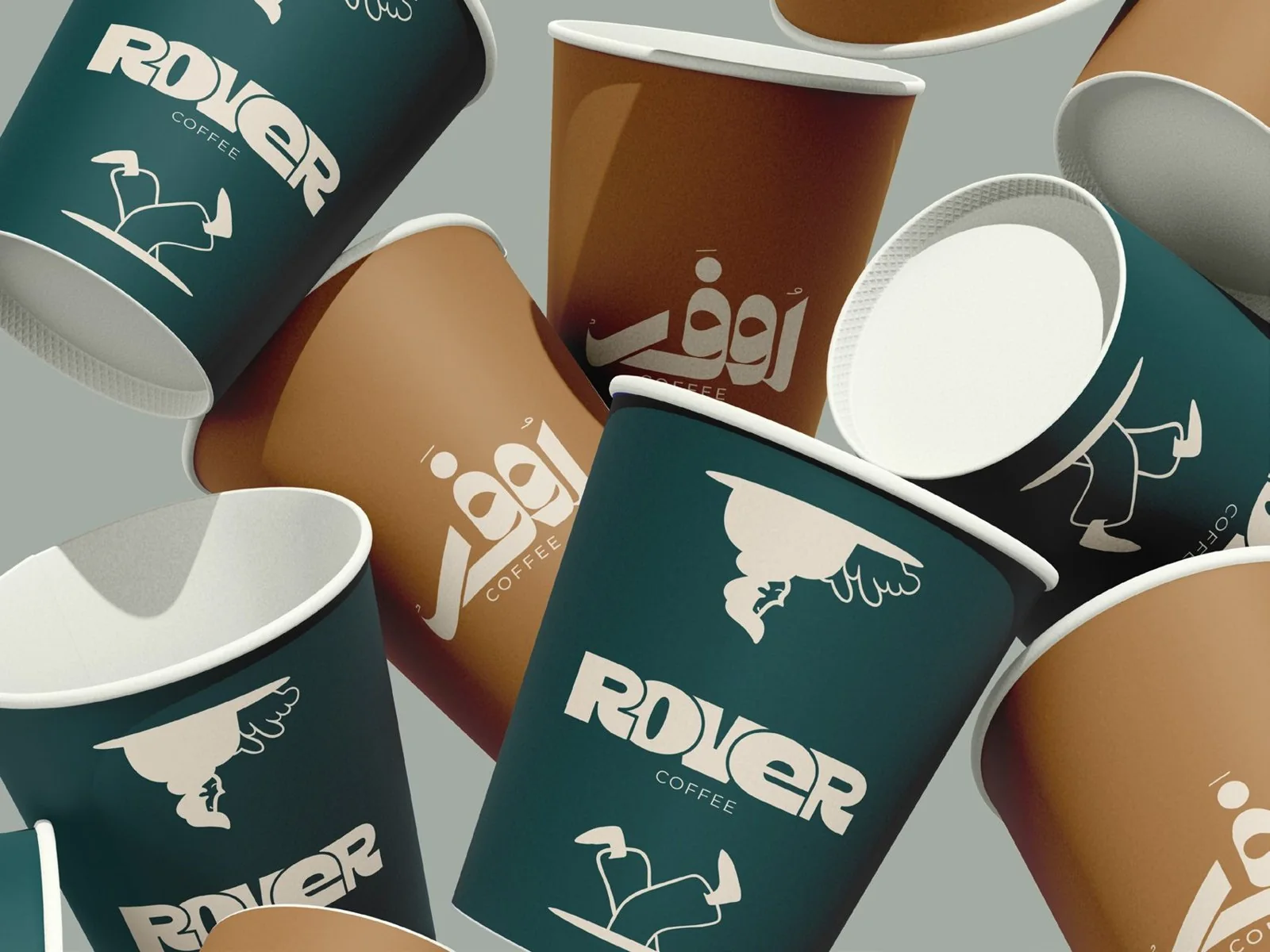
In Saudi Arabia, the cup is the billboard. A takeaway cup travels through offices, cars and Instagram stories more often than any sign or ad you will pay for. Yet most new coffee brands brief their packaging piece by piece: a logo, then a cup, then a bag when retail comes up, then a gift box in a panic before Ramadan. The result is five pieces that look like five brands. This guide covers how we design coffee packaging for Saudi cafés and roasters as one system, what it costs in riyals, the labelling basics, and how to make Arabic and English work on a 12 oz cup.
What does a coffee brand actually need to package?
| Piece | Where it works | What the system has to solve |
|---|---|---|
| Hot and iced cups, lids, sleeves | Counter, drive-through, social | One mark that reads on a curved surface, in one or two print colours, at a glance |
| Carry boxes and paper bags | Takeaway, delivery apps | The brand on the outside of the delivery rider's bag, not just inside it |
| Coffee bags (250 g, 1 kg) | Retail shelf, app, café counter | Origin and roast information in a fixed block, Arabic label panel |
| Drip bags, sachets, capsules | Gifting, offices, travel | The smallest print area in the range; the wordmark has to hold alone |
| Gift box and seasonal edition | Ramadan, corporate, Founding Day | A seasonal layer over the same architecture, briefed months ahead |
If you only sell beans, our guide to specialty coffee bag packaging in Saudi Arabia goes deeper on the retail bag. This article is about the whole system.
How do we design a coffee packaging system?
- Brief and counter audit (days 1 to 3). Your menu, your formats, your price point and the five cafés your customers compare you with. We photograph the competition on cups, not on websites.
- Identity and voice (week 1). A wordmark in Arabic and English drawn to the same weight, a tight palette, and the lines of copy that give the cup a personality.
- The hero cup (week 1 to 2). We design the cup first because it is the piece customers see most. Everything else inherits from it.
- The range (week 2 to 3). Bags, boxes, sleeves, sachets and cards rolled out from the cup's rules, with the retail label panel set in.
- 3D at real scale and print-ready files (week 3). We render the full set in 3D before print, so you review packaging as it will look, and the same model gives you launch content.
With menu, formats and label text confirmed early, a defined packaging set can be print-ready in about 3 weeks. Cup suppliers often have fixed templates and minimum order quantities, so get their dielines in week one.
What does coffee packaging design cost in Saudi Arabia?
| Scope | Typical design fee | Usually includes |
|---|---|---|
| Retail bag range only | SAR 11,000 to 26,000 | Bag system across origins and sizes, label panel, print-ready files |
| Café packaging set | SAR 11,000 to 26,000 | Cups, sleeves, bags, boxes and stickers for an existing identity |
| Identity + café + retail | SAR 26,000 to 56,000+ | Bilingual identity, full packaging system, 3D renders, brand rules |
These are design fees, before printing and any VAT. More SKUs, more origins and a seasonal edition move a project up the range. Compare quotes line by line with our Saudi packaging cost guide.
What labelling rules apply to coffee in Saudi Arabia?
- Retail packs need Arabic labelling. Bags and boxes sold as prepackaged food must carry their mandatory information in Arabic, following SFDA requirements and GSO 9: product name, net weight, producer or importer details, country of origin, and production and expiry dates printed on the pack.
- Plain roasted coffee is usually exempt from the nutrition panel as a single-ingredient food. Flavoured coffee, blends with additives, and ready-to-drink products may not be. Confirm with your regulatory consultant.
- Roast date is your choice. We found no Saudi rule that requires it, but specialty buyers look for it. Give it a fixed print zone.
- Menus show calories and caffeine. Since 1 July 2025, cafés in the Kingdom must display calories and caffeine content on menus. That affects menu boards, app listings and any printed menu card in your packaging set, so build a clear spot for it into the menu layout.
Our SFDA label checklist turns the label rules into a layout checklist. This is design guidance, not regulatory advice.
How do you fit Arabic and English on a coffee cup?
- Draw the Arabic wordmark, do not type it. Rover Coffee's Arabic wordmark was drawn to the same weight as the English one, so the brand reads the same in both languages.
- Split the cup, not the line. A cup has a front and a back. Put the Arabic mark on one face and the English on the other, or stack them on a central axis. Avoid squeezing both into one line.
- Design for one-colour print. Many cup runs print in one or two colours. A mark that only works in full colour will fail on the cheapest, most-used piece.
- Mind the curve and the seam. Keep text away from the cup seam and test the artwork wrapped, not flat.
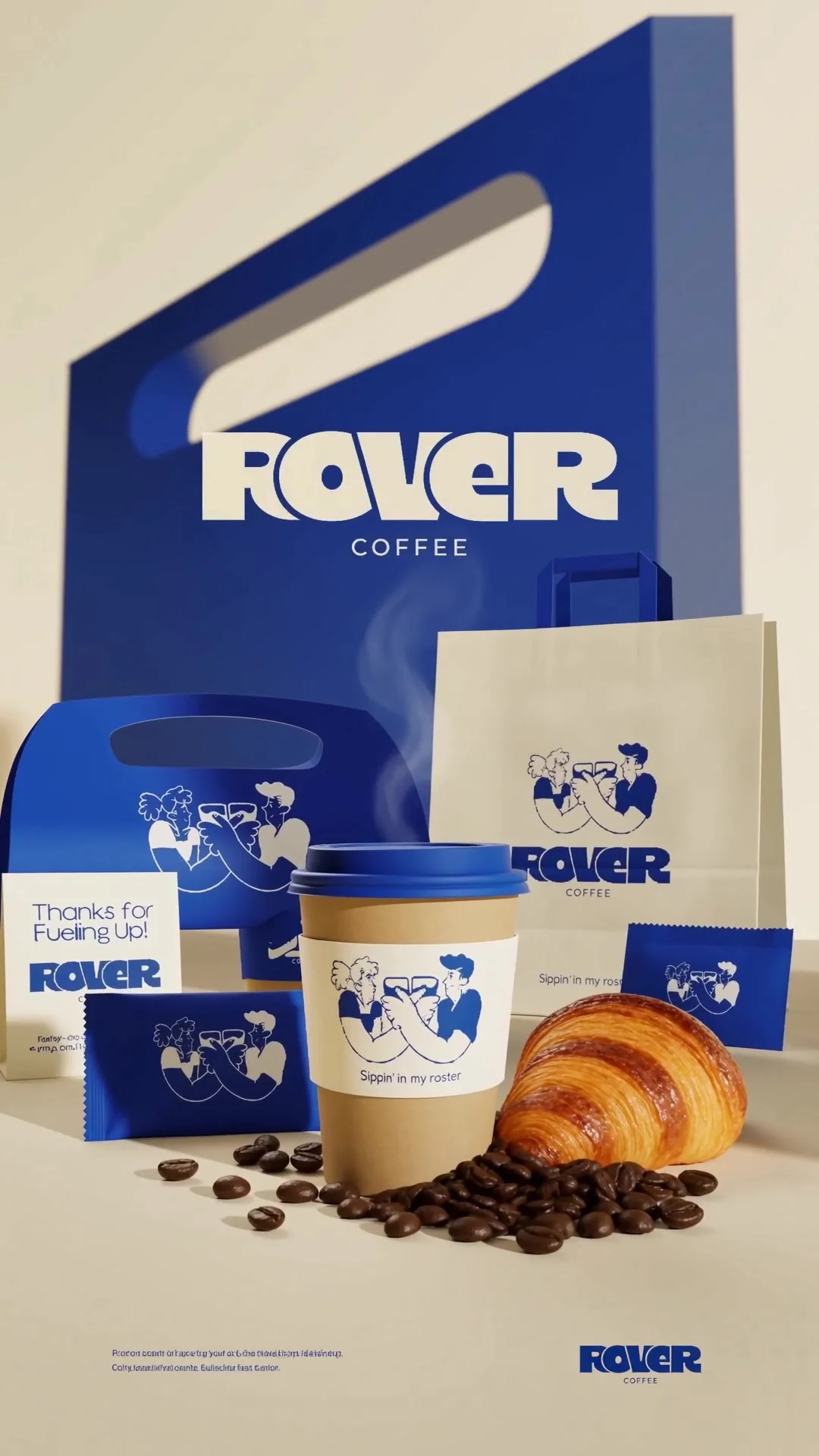
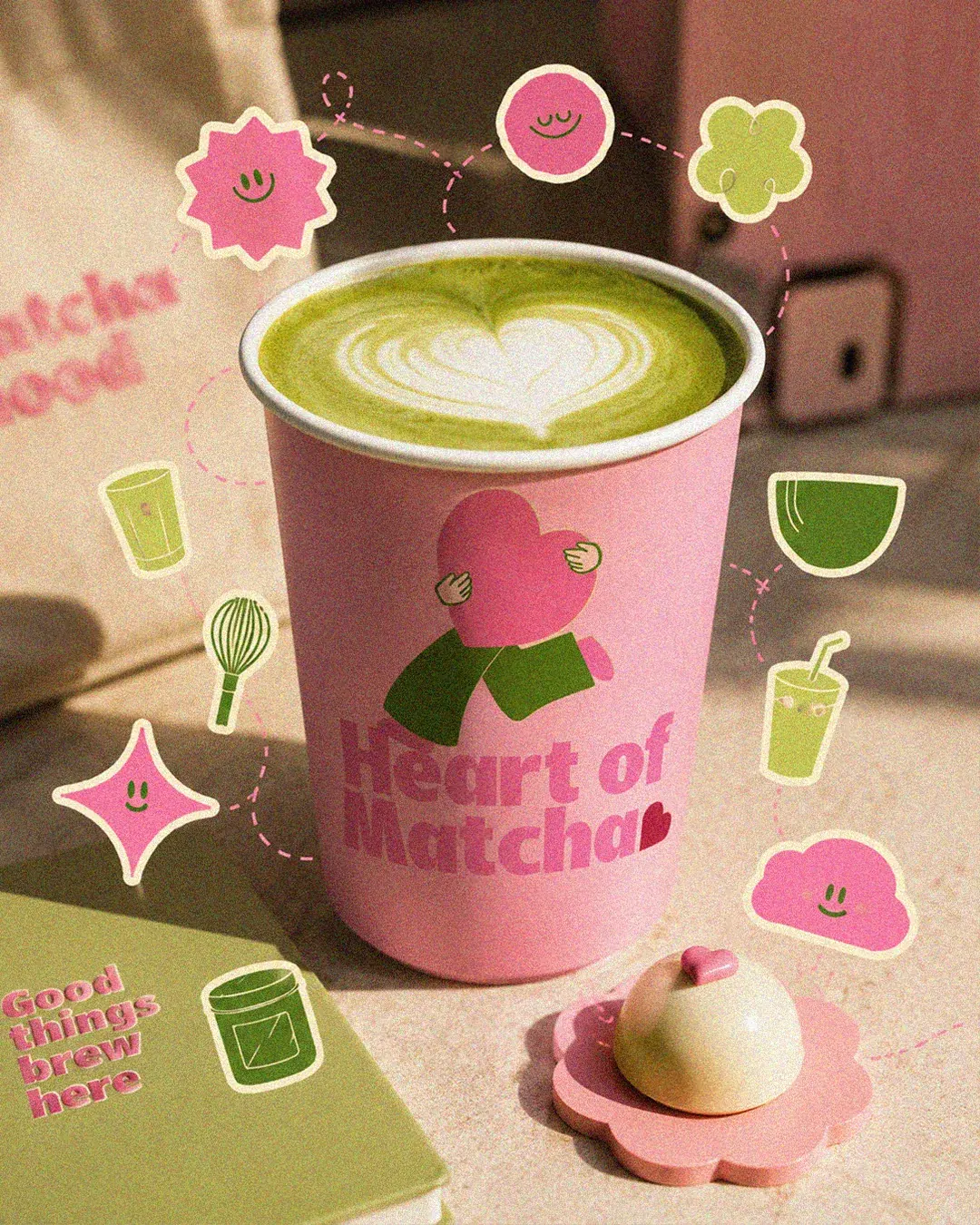
- Give the brand a picture. Rover uses sticker-style drawings in one blue; Heart of Matcha uses a heart mascot. A recurring character makes the cup recognisable before anyone reads it.
Common mistakes we see on Saudi coffee packaging
- An English-only cup with Arabic added later as a sticker.
- A logo that only works in full colour and on white.
- Retail bags designed a year after the café, so they look like a different company.
- No space planned for the Arabic label panel on the back of the bag.
- Ramadan packaging briefed in January, when printers are already full.
Why coffee brands work with Lircle
Lircle Creative Studio has worked with 45+ client brands, most of them in the GCC. Our coffee and café work includes Rover Coffee (bilingual identity, packaging system and CGI launch film), Heart of Matcha (identity, mascot, tins, boxes and cups) and Driplet (café identity across signage, cups and packaging). Every project is run personally by a Lircle director. See our coffee packaging design page or how we work with brands across the Kingdom on our Saudi Arabia packaging page.
Frequently asked questions
How much does coffee packaging design cost in Saudi Arabia?
With an independent studio, about SAR 11,000 to 26,000 for a focused set such as a retail bag range or café cups and bags, and SAR 26,000 to 56,000 or more for a bilingual identity with a full café and retail system. Printing and VAT are separate.
What packaging does a new café in Saudi Arabia need?
Usually hot and iced cups with lids and sleeves, carry boxes, paper bags, stickers and cards, plus retail coffee bags and drip bags if you sell beans. Designing them as one system keeps the brand consistent and makes new pieces faster to add.
Do coffee bags in Saudi Arabia need a nutrition label?
Plain roasted coffee is a single-ingredient food and is usually exempt from the nutrition panel, but the label must still carry its mandatory information in Arabic, including printed production and expiry dates. Flavoured or blended products may lose the exemption.
Do Saudi cafés have to show calories and caffeine?
Yes. Since 1 July 2025, cafés in Saudi Arabia must show calories and caffeine content on their menus. Plan space for it in menu boards, app listings and printed menus.
How long does a coffee packaging project take?
With the menu, formats and label text confirmed early, a defined packaging set can be print-ready in about 3 weeks. Printing and supplier lead times are separate.